

Published: 18.11.2026
See moreWhat Is Air Humidity? Understanding Its Effects And Impact
 Kosmen Tây Nguyên
 Published:
19/11/2026, 14:00
- Updated at 19/11/2026, 14:22
Why do some days feel comfortable while others feel unbearably muggy, even when the temperature is the same? Why do floors become damp during humid weather despite no water being spilled? In this article, Kosmen explores what air humidity is, ideal indoor humidity levels, how humidity relates to temperature and weather, and how humidity conditions vary across Vietnam throughout the year.
Understanding Air Humidity: What It Means for Your Health and Home
Air humidity plays an important role in our health and everyday comfort, yet many people are unfamiliar with what this measurement actually means. Before determining the ideal humidity level, it helps to understand how humidity is defined, the different ways it is measured, and why it matters.
1. What Is Humidity? Understanding the Different Types of Air Humidity
Humidity refers to the amount of water vapor present in the air. This moisture comes from the evaporation of water from rivers, lakes, and oceans, as well as transpiration from plants. Humidity levels fluctuate with weather conditions and are influenced by temperature and the surrounding environment.
To better understand air humidity, it is useful to distinguish three common measurements:
- Absolute humidity: The actual mass of water vapor contained in one cubic meter of air, measured in g/m³. It is commonly used in climate studies.
- Relative humidity: The ratio of actual water vapor pressure to saturation vapor pressure at the same temperature, expressed as a percentage (%RH). As relative humidity approaches 100%, condensation becomes more likely. This measurement is widely used in weather forecasting and humidity monitoring.
- Maximum humidity (saturation humidity): The maximum mass of water vapor that can exist in one cubic meter of air at a given temperature, measured in g/m³. This limit increases as temperature rises.
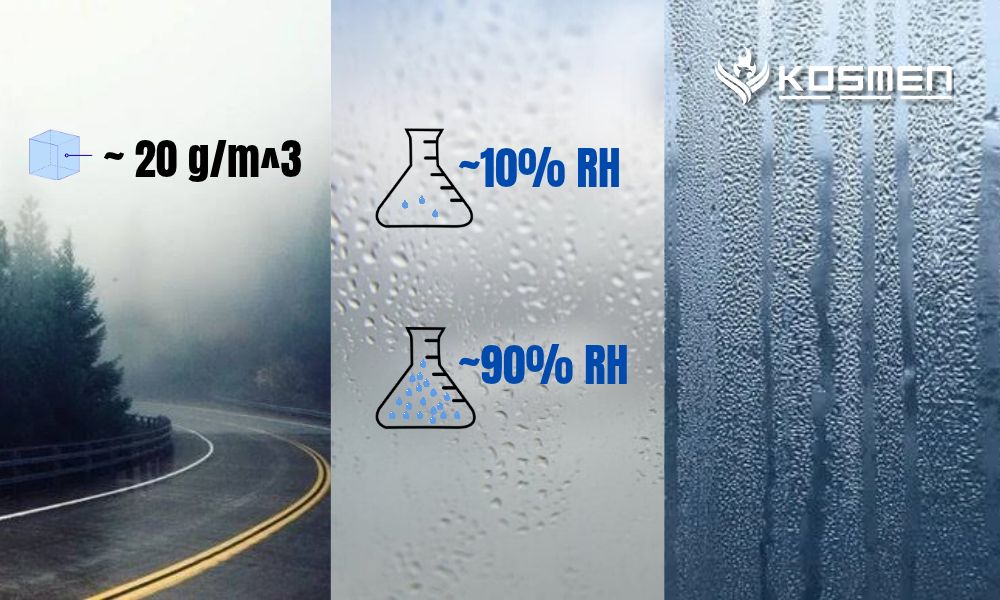
Differences between absolute, relative, and saturation humidity
For example, a relative humidity reading of 60% RH means that the actual water vapor pressure is 60% of the saturation vapor pressure at the current temperature. It does not mean that the air consists of 60% water.
2. Why Is Air Humidity Important?
Air humidity directly affects personal comfort and the quality of indoor environments. When the air is too dry, it can cause dry skin and irritation in the nose and throat. In hot, humid conditions, sweat evaporates more slowly, making the body feel warmer and more uncomfortable.
Prolonged exposure to excessive moisture also creates favorable conditions for mold growth. This can damage walls, clothing, and wooden furniture while contributing to respiratory symptoms, respiratory infections, and worsening asthma. What many people do not realize is that moisture can condense behind furniture or on cold walls even when a room appears completely dry. This explains why mold sometimes develops in hidden corners long before any visible signs of dampness appear.
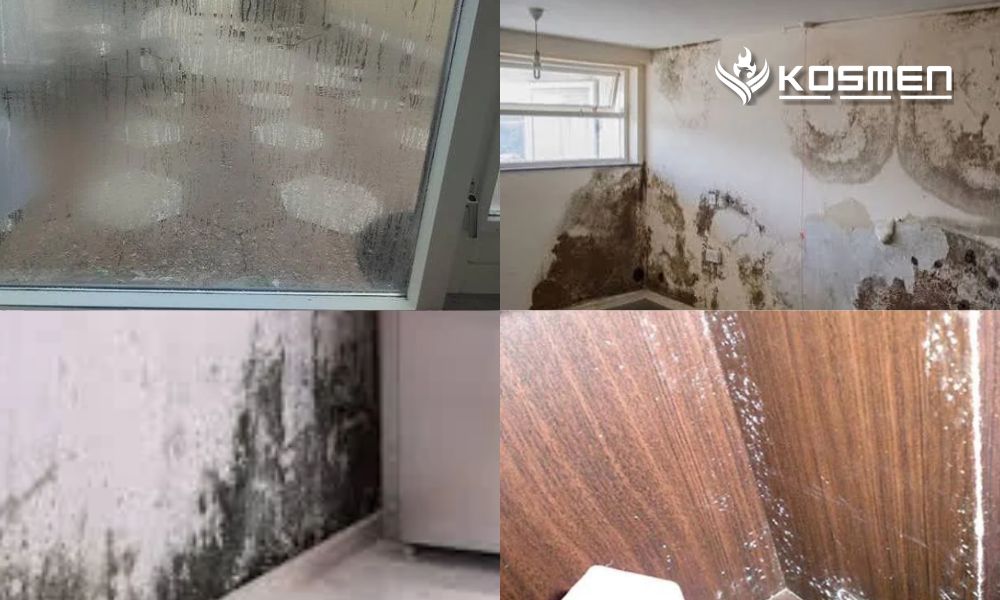
Mold growth caused by high humidity
3. What Is the Ideal Indoor Humidity Level?
Indoor relative humidity should generally remain below 60%, with an ideal range of approximately 30–50% to help minimize mold growth.
Relative Humidity (RH) | Common Effects |
Below 30% | Dry skin, chapped lips, and discomfort |
40–60% | Ideal range for many indoor environments |
Above 60% | Increased risk of mold growth when sustained over time |
If your home frequently smells musty, windows develop condensation, or clothes take unusually long to dry, consider using a thermo-hygrometer rather than relying on how the air feels.
When relative humidity remains high for extended periods, identify potential moisture sources, check ventilation, and consider using a dehumidifier.
Humidity and Temperature: Clearing Up Common Misconceptions
Humidity and temperature are closely connected, but hot weather does not necessarily mean low humidity, just as cold weather does not always mean high humidity. Understanding how moisture levels respond to heat, cold, and rainfall can help explain many familiar weather conditions.
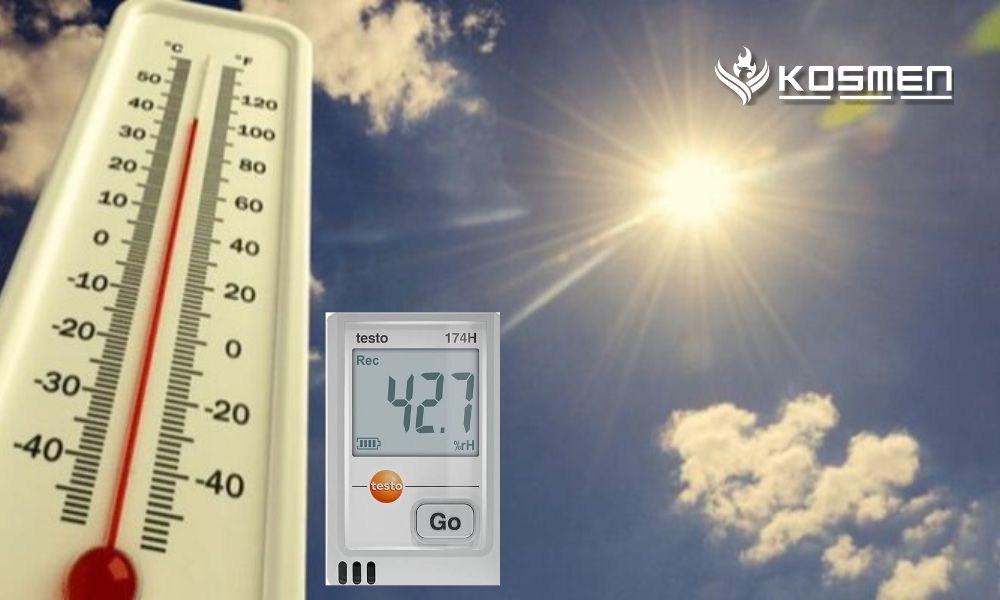
The relationship between humidity and temperature
1. Does Higher Temperature Always Mean Lower Humidity?
The idea that relative humidity decreases as temperature rises is only true when the amount of water vapor in the air remains constant. Under these conditions, warmer air has a higher saturation vapor pressure, causing relative humidity to fall. However, when water vapor levels increase alongside temperature, relative humidity may remain unchanged or even rise.
So, does hot weather mean high or low humidity? The answer depends on how much water vapor is present.
After rainfall, for example, water continues to evaporate from the ground, potentially keeping humidity levels high. As a result, sweat evaporates less efficiently, making it harder for the body to release heat and leaving people feeling hot and sticky.
By contrast, hot days accompanied by dry winds often have lower relative humidity, allowing sweat to evaporate more easily and making the heat feel more tolerable.
This explains why two days with identical temperatures can feel completely different depending on the humidity level.
2. Is Humidity Higher When It Rains? What Humidity Level Causes Rain?
Rainy weather is generally associated with high relative humidity because the air contains substantial moisture and temperatures often fall. However, when rain first begins after a prolonged period of hot, dry weather, humidity near the ground may still be relatively low before gradually increasing as the rain continues.
But what humidity level is needed for rain?
There is no specific relative humidity threshold that guarantees rainfall. Even at 90–100% RH, conditions may produce fog, mist, or frost rather than rain.
For this reason, checking the probability of precipitation provides a more reliable indication of upcoming rain than humidity readings alone.
3. Is Humidity High or Low in Cold Weather? Understanding Dry Winter Air
Humidity during cold weather depends largely on the amount of moisture present in the atmosphere.
Relative humidity is often high when cold conditions are accompanied by drizzle, fog, or moist sea winds. Conversely, when cold, dry air masses move into an area, atmospheric moisture levels can decrease, leading to dry skin, chapped lips, and throat irritation.
Indoor heating can make these conditions even more noticeable. As a heater raises room temperature without adding moisture, relative humidity decreases, making the indoor air feel drier.
Cold weather, therefore, does not automatically indicate high or low humidity. Actual conditions depend on the surrounding weather patterns. Using a thermo-hygrometer can help you monitor indoor humidity and make appropriate adjustments.
Air Humidity in Vietnam: Climate Patterns and Seasonal Changes
Vietnam experiences distinctive humidity patterns across its regions. At the same time of year, Northern Vietnam may have dry, chilly conditions, Central Vietnam may experience prolonged rainfall, while Southern Vietnam remains hot and sunny. What causes these differences, and how does humidity change throughout the year?

Humidity levels vary across regions in Vietnam
1. Is Vietnam's Average Humidity Above 80%?
Vietnam generally experiences high humidity, with annual averages of approximately 80–85%, largely due to its tropical monsoon climate. Its proximity to the East Sea (South China Sea), substantial rainfall, and frequent moisture-bearing winds contribute to the country's humid conditions. However, this does not mean relative humidity stays above 80% everywhere or throughout the year.
During rainy periods or particularly damp weather, humidity can exceed 90%. In contrast, hot conditions accompanied by dry winds may cause humidity levels to drop considerably. Humidity across Vietnam also varies according to geographical location, season, and prevailing weather conditions.
2. Is Humidity Higher in Winter or Summer in Vietnam?
Winter humidity varies considerably between regions and weather patterns. In Northern Vietnam, early winter is often relatively dry due to the arrival of cold, dry air masses. Toward the end of winter, moisture-bearing winds from the sea increase humidity, bringing drizzle, fog, and persistent damp conditions. Central and Southern Vietnam, meanwhile, experience less pronounced cold winters. Their humidity patterns are primarily shaped by the rainy and dry seasons.
What about summer? Northern Vietnam typically experiences hot, humid summers with frequent rainfall, resulting in relatively high humidity. Central Vietnam may experience periods of hot, dry foehn winds that cause humidity to fall sharply. In Southern Vietnam, summer largely coincides with the rainy season. Increased atmospheric moisture during this period generally leads to higher humidity.
3. How Does Humidity Differ Across Vietnam's Regions?
Vietnam's humidity patterns vary across its three main regions due to differences in geography, terrain, and monsoon activity. Each region has its own characteristic wet and dry periods, influencing how households protect belongings and maintain comfortable indoor environments.
- Northern Vietnam: November through January is generally cooler and drier, while humidity rises between February and April due to drizzle and persistent damp weather. In Hanoi, average annual humidity is approximately 79%, increasing to around 82% in March and April and falling to about 73% in December.
- Central Vietnam: Humidity typically decreases during the hot, dry season and rises during the rainy months. In Da Nang, relative humidity averages around 77% in June and July, increasing to approximately 86–88% in October and November.
- Southern Vietnam: Humidity is generally higher during the rainy season (May–November) and lower during the dry season (December–April). In Ho Chi Minh City, average humidity is approximately 80% during the rainy season, compared with around 74.5% in the dry season. High humidity during rainy months can make the air feel particularly muggy.
Whether you live in Northern, Central, or Southern Vietnam, monitoring indoor humidity is important in a country where moisture levels are generally high. If laundry takes longer to dry, condensation appears on walls, or musty odors develop indoors, check for sources of excess moisture and take steps to maintain a suitable humidity level for a more comfortable living environment.
In manufacturing, humidity can affect raw material quality, finished products, and operational efficiency. Industries such as food processing, pharmaceuticals, electronics, textiles, woodworking, and warehousing are particularly vulnerable to mold growth, product damage, and corrosion...
Learn more: The Role and Importance of Humidity in Manufacturing
Understanding air humidity and how it changes with the weather makes it easier to maintain a dry and comfortable home. With a range of dehumidification capacities and convenient features such as adjustable humidity settings, timers, and Wi-Fi control, Kosmen dehumidifiers help manage excess moisture and reduce the risk of mold growth throughout the year. Explore Kosmen's range of dehumidifiers to find the right solution for your home!
KOSMEN - PIONEERING SOLUTIONS FOR HUMIDITY CONTROL & AIR QUALITY
- Head Office: No. 77 Dinh Thi Thi Street, Van Phuc City Residential Area, Hiep Binh Ward, Ho Chi Minh City
- Representative Office: No. 27B Street No. 12, Hiep Binh Ward, Ho Chi Minh City
- Hanoi Office: No. NV 4.7, Cau Buou New Urban Area, Thanh Liet Ward, Hanoi City
- Da Nang Office: No. 41 Vo An Ninh Street, Hoa Xuan Ward, Da Nang City
- Da Lat Office: No. 38/7, Ba Thang Hai Alley, Xuan Huong - Da Lat Ward, Lam Dong Province
- Hotline: 0766 899 799 (Northern Region) - 0935 696 695 (Central Region) - 0965 210 874 (Southern Region) - 0975 359 877 (Central Highlands)
- Website: https://kosmen.com.vn/en
Share the article


Related news

What Is Considered High Humidity? Is High Humidity Good? Its Harmful Effects?
Published: 05.03.2025
See more