


Published: 06.10.2026
See moreDesiccant Rotor Dehumidifiers: Working Principle, Structure, And Applications
 Kosmen Hồ Chí Minh
 Published:
19/11/2026, 14:54
- Updated at 19/11/2026, 15:09
Rotor dehumidifiers have become a popular humidity control solution among manufacturers, particularly in environments where low and stable humidity levels must be maintained. So, how are these systems designed, how do they work, and which industries can benefit from their applications? Let's explore everything you need to know about rotor dehumidifiers with Kosmen in the article below.
What is a Rotor Dehumidifier?
A rotor dehumidifier, also known as a desiccant dehumidifier, is a device that uses a rotating desiccant wheel containing moisture-absorbing materials such as silica gel or other specialized desiccants to remove water vapor from the air. As air passes through the rotor wheel, moisture is captured by the desiccant material, while the resulting dry air is discharged into the surrounding environment.
Thanks to this operating mechanism, rotor dehumidifiers can maintain very low humidity levels, even below 40% RH, with minimal fluctuations. This makes them a trusted solution in industries with strict humidity control requirements, such as healthcare, cleanrooms, and laboratories.
In addition, rotor dehumidifiers can operate reliably in environments with temperatures below 10°C, making them suitable for spaces with demanding environmental conditions.
Structure and Working Principle of a Rotor Dehumidifier
Rotor Dehumidifier Structure
Most rotor dehumidifiers available today consist of the following main components:
1. Desiccant Rotor Wheel: Designed with a honeycomb structure to increase the contact area between the desiccant material and the airflow, thereby improving moisture exchange and overall dehumidification efficiency.
2. Desiccant Material: Typically made of silica gel or other specialized moisture-absorbing materials. These materials can adsorb water vapor from the air and quickly release the absorbed moisture when heated, allowing the rotor to operate continuously.
3. Drive Motor: Responsible for driving and maintaining the continuous rotation of the rotor wheel, allowing the adsorption and regeneration zones to operate alternately.
4. Process Fan: Draws in and directs the air requiring treatment through the rotor wheel. After moisture removal, the dry air is supplied back into the space where humidity needs to be controlled.
5. Regeneration Fan: Directs regeneration air through the desorption zone of the rotor wheel and then exhausts the moisture-laden air into the outside environment.
6. Heating Device: Heats the regeneration airflow before it passes through the rotor wheel, enabling the desiccant material to release the moisture it has adsorbed. Depending on the equipment design and technology, the heat source may be electric heating elements, steam, hot water, or other suitable heating systems.
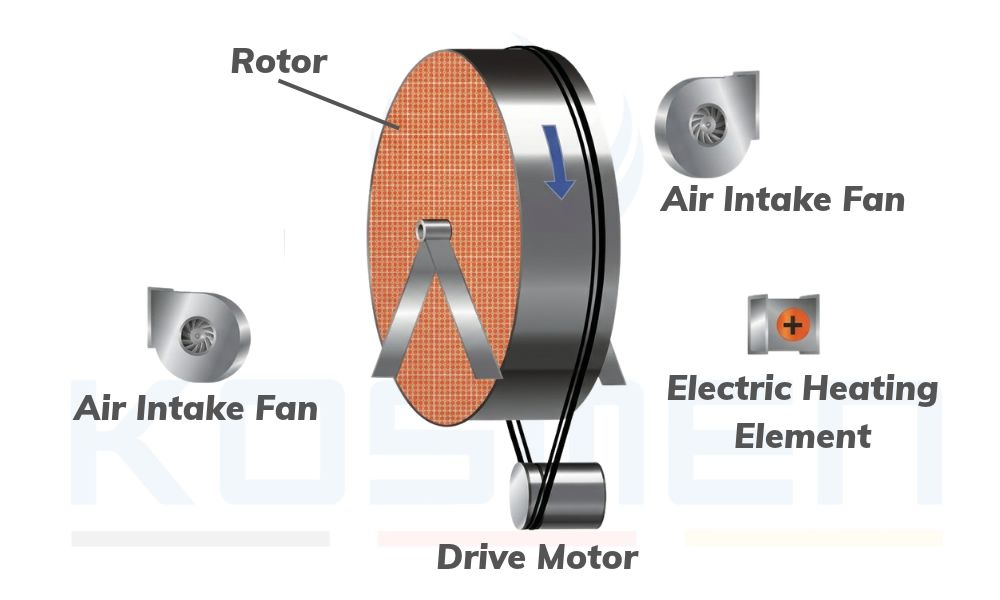
Rotor Dehumidifier Structure
How Does a Rotor Dehumidifier Work?
The working principle of a rotor dehumidifier is based on moisture adsorption through a rotating wheel containing specialized desiccant materials, most commonly silica gel. When humid air passes through the rotor wheel, the desiccant material adsorbs water vapor, reducing the moisture content of the air. The dehumidified airflow is then supplied back into the space being treated.
The rotor wheel in desiccant dehumidifiers features a honeycomb structure and rotates continuously at a low speed. This design increases the contact area between the air and the desiccant material while ensuring a continuous dehumidification process.
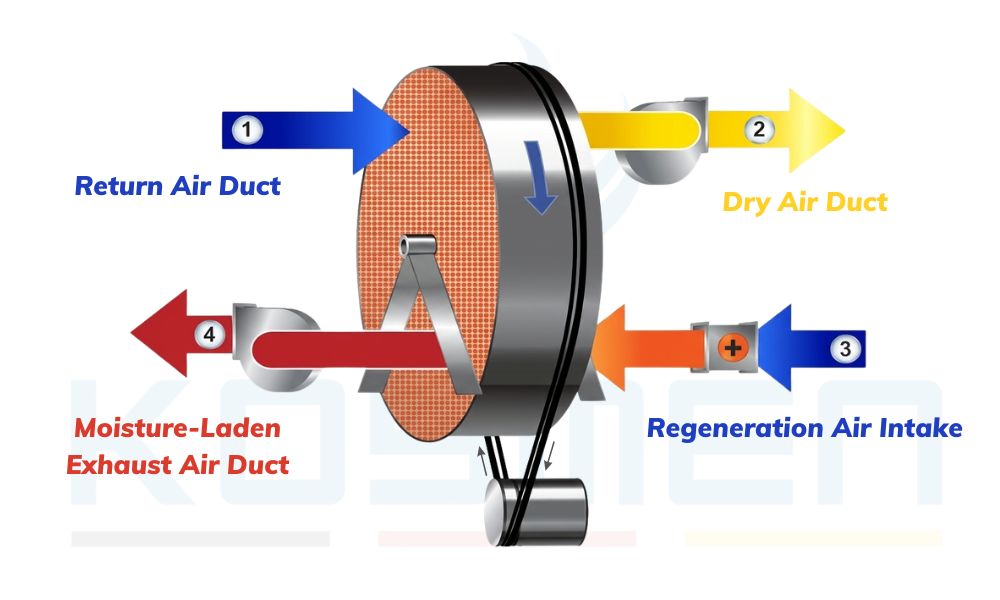
How a Rotor Dehumidifier Works
In terms of moisture removal and desiccant regeneration, the rotor wheel is divided into two main operating zones:
- Moisture Adsorption Zone: Humid air is drawn into the unit by the fan and directed through the rotor wheel. Here, the desiccant material adsorbs water vapor from the air, producing a dry airflow that is then supplied back into the room.
- Desiccant Regeneration Zone: As the rotor wheel rotates into this zone, a separate airflow is heated and directed through the rotor. The elevated temperature causes the adsorbed water vapor to be released from the desiccant material. The hot, moisture-laden air is then exhausted outside, allowing the desiccant material to dry and become ready for the next adsorption cycle.
As the rotor wheel continuously rotates between these two zones, moisture adsorption and desiccant regeneration take place simultaneously, enabling the equipment to maintain continuous dehumidification.
Applications of Rotor Dehumidifiers
Selecting an industrial dehumidification technology depends on several factors, including ambient temperature, relative humidity (RH), dew point requirements, and the specific characteristics of the production process.
For industries that require precise humidity control, minimal humidity fluctuations, or reliable operation under low-temperature conditions, conventional refrigerant dehumidifiers may not meet the required technical specifications. In such cases, desiccant rotor dehumidifiers are a solution worth considering.

Rotor Dehumidifiers Are Ideal for Various Manufacturing Applications
By using desiccant materials that directly adsorb water vapor from the air, rotor technology can reduce air moisture content to very low levels while maintaining effective dehumidification across a wide range of operating temperatures.
As a result, rotor dehumidifiers are widely used in cold storage facilities, cleanrooms, pharmaceutical manufacturing, electronic component storage, and industrial drying applications.
1. When Low Humidity Levels Must Be Maintained
One of the most common situations requiring a rotor dehumidifier is when manufacturing or storage processes demand consistently low relative humidity levels.
Refrigerant dehumidifiers use a cooling mechanism to remove water vapor from the air through condensation. However, their moisture removal capacity may become limited when extremely low outlet humidity levels are required. By comparison, rotor dehumidifiers use specialized desiccant materials to adsorb water vapor, making them more suitable for applications requiring deep dehumidification.
- Typical applications include: Pharmaceutical and Biotechnology Manufacturing: Maintaining stable humidity levels helps prevent moisture absorption, powder caking, and similar issues during raw material weighing and dispensing, powder blending, tablet compression, capsule filling, and packaging. HVAC systems in pharmaceutical manufacturing facilities must also meet applicable Good Manufacturing Practice (GMP) requirements for temperature and humidity control, monitoring, and recording where necessary.
- Food Processing and Moisture-Sensitive Ingredient Storage: Powdered products, milk powder, spices, sugar, confectionery, and other hygroscopic food ingredients are susceptible to caking, structural changes, and quality deterioration when exposed to humid air.
- Aerospace, Maritime, and Defense Industries: Equipment, composite materials, electronic systems, and specialized components must be stored under suitable environmental conditions to minimize corrosion, material degradation, and moisture-related damage.
- Cleanrooms: Certain manufacturing processes require relative humidity levels of 30% RH or lower to minimize the impact of moisture on product quality and production conditions.
- Electronic Component Storage Facilities: High humidity can increase the risk of oxidation and corrosion while potentially affecting the performance and properties of electronic components. Rotor dehumidification systems help maintain a stable, low-humidity storage environment.
2. When Systems Operate in Low-Temperature Environments
Ambient temperature is one of the key factors directly affecting the performance of refrigerant dehumidifiers. As air temperature decreases, the ability of water vapor to condense on the cooling coil becomes limited. Frost formation may also occur on the evaporator surface.
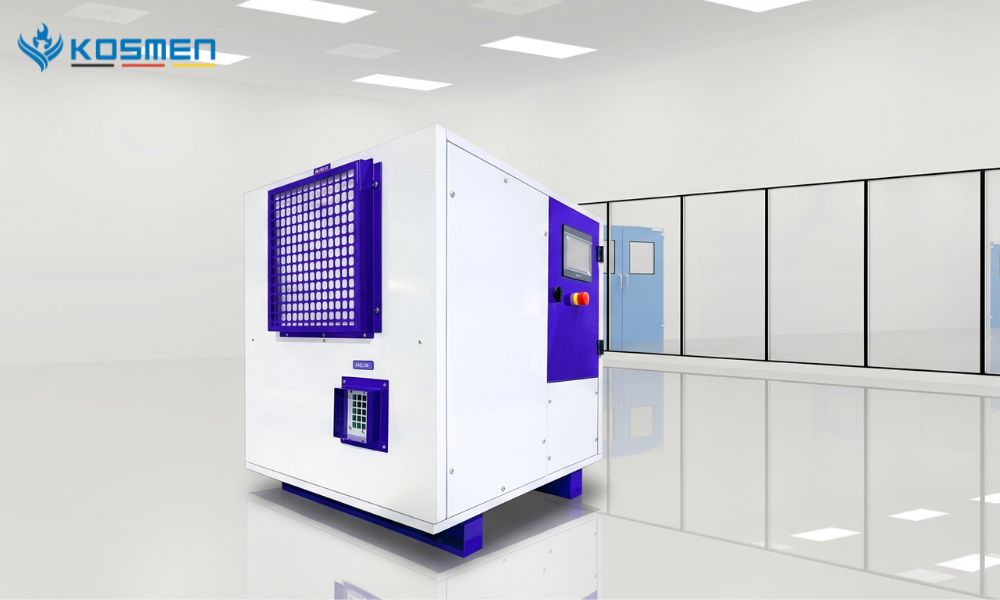
Rotor Dehumidifiers Perform Reliably in Low-Temperature Environments
In contrast, rotor dehumidifiers operate based on the principle of water vapor adsorption and are therefore less dependent on ambient temperature than conventional refrigerant-based systems. This makes them a suitable choice for applications that require reliable humidity control under low-temperature conditions.
Common applications include:
- Cold Storage Facilities: Humidity control helps minimize condensation, frost formation, and moisture accumulation in areas where goods are stored.
- Storage Rooms Below 10°C: In low-temperature environments, rotor dehumidifiers can maintain moisture removal performance without relying on the cooling-based condensation mechanism used by conventional dehumidifiers.
3. When Dew Point Control and Condensation Prevention Are Required
In cold storage systems and areas with significant temperature differences, controlling relative humidity alone may not be sufficient. The dew point of the air is also an important parameter to consider when designing and operating these systems.
When the surface temperature of equipment, storage room walls, or other components exposed to the air falls below the dew point, water vapor in the air condenses into droplets on those surfaces. This can lead to condensation and frost formation, potentially affecting product quality and equipment operating efficiency.
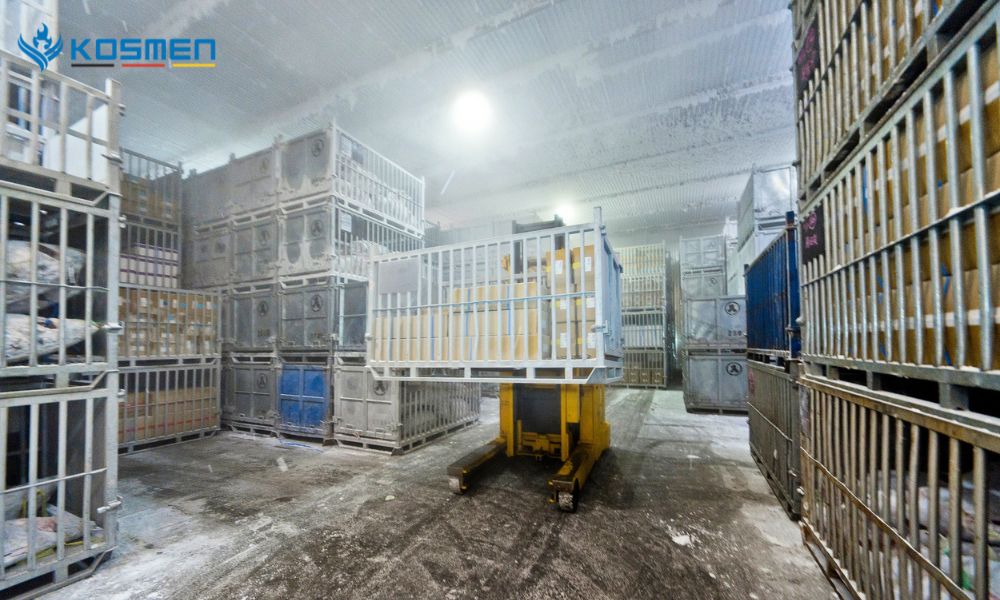
Rotor Dehumidifiers Perform Reliably in Low-Temperature Environments
Desiccant rotor dehumidifiers help reduce the moisture content of the air, thereby lowering its dew point and minimizing the risk of moisture condensation.
Typical applications of rotor dehumidifiers for dew point control include:
- Cold Storage Entrance Areas: Warm, humid air entering a low-temperature environment can easily cause condensation or frost formation. Humidity control helps minimize these issues when outside air enters the cold storage area.
- Packaging and Cold Goods Transfer Areas: Maintaining a low dew point helps prevent water vapor from condensing on product surfaces, packaging materials, and equipment.
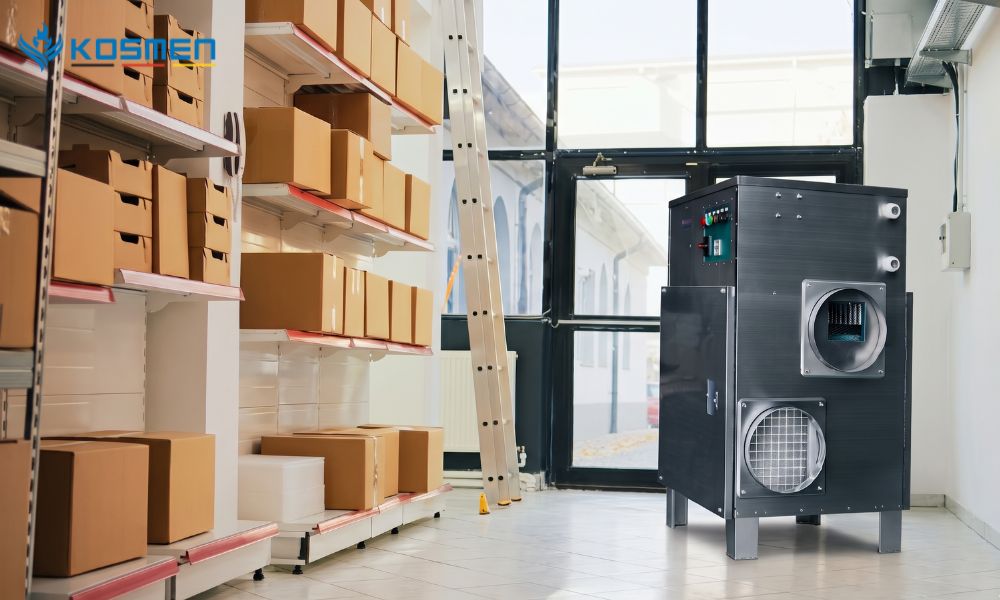
Rotor dehumidifiers for humidity control in Packaging materials and Products in Packaging Rooms
4. When Humidity Control Is Required in Drying Processes
In industrial drying systems, the moisture content of the drying air directly affects the rate at which moisture transfers from products into the surrounding environment.
Low-humidity air allows water vapor to escape more easily from products, helping shorten drying times and improve drying efficiency. Therefore, with their precise humidity control capabilities, desiccant dehumidifiers are particularly suitable for drying applications that require low-temperature dry air or tightly controlled drying conditions.
Typical applications include:
- Low-Temperature Drying Systems: Supply low-humidity airflow to support moisture removal from products without requiring excessively high drying temperatures.
- Low-Temperature Drying Applications: Suitable for heat-sensitive products that require minimal exposure to high temperatures during the drying process.
- Herbal and Food Drying: Help control temperature and humidity throughout the drying process, minimizing the adverse effects of moisture conditions on product quality.
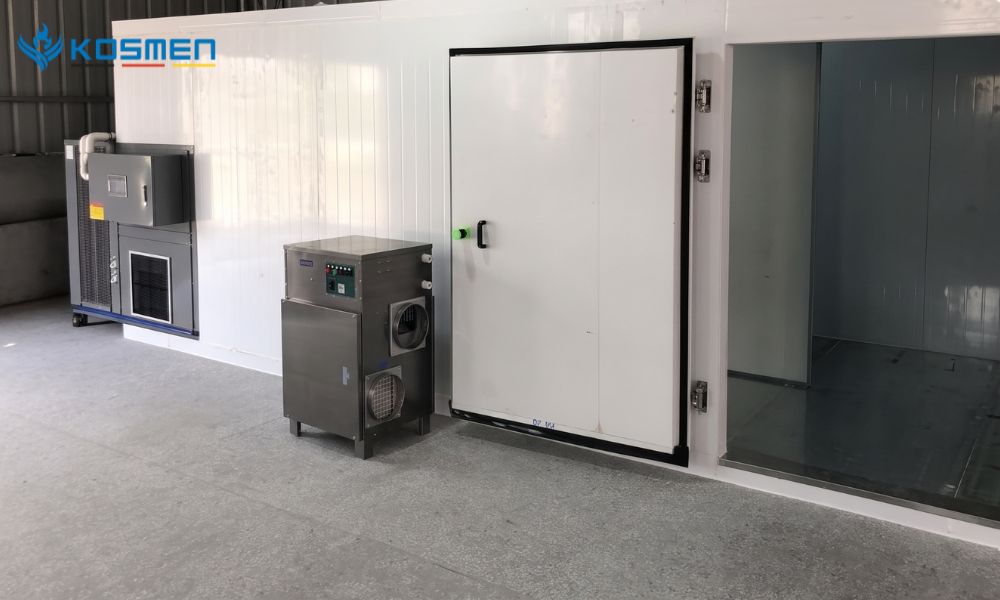
Integrating Rotor Dehumidifiers into Low-Temperature Drying Systems
The above article provides an overview of the structure, working principle, and practical applications of rotor dehumidifiers. We hope this information has helped you better understand desiccant rotor dehumidifiers and their potential applications in manufacturing and storage operations.
If you are looking for a humidity control solution that meets your business requirements or specific production conditions, contact Kosmen today for detailed consultation and assistance in selecting the most suitable equipment for your needs.
KOSMEN - PIONEERING SOLUTIONS FOR HUMIDITY CONTROL & AIR QUALITY
- Head Office: No. 77 Dinh Thi Thi Street, Van Phuc City Residential Area, Hiep Binh Ward, Ho Chi Minh City
- Representative Office: No. 27B Street No. 12, Hiep Binh Ward, Ho Chi Minh City
- Hanoi Office: No. NV 4.7, Cau Buou New Urban Area, Thanh Liet Ward, Hanoi City
- Da Nang Office: No. 41 Vo An Ninh Street, Hoa Xuan Ward, Da Nang City
- Da Lat Office: No. 38/7, Ba Thang Hai Alley, Xuan Huong - Da Lat Ward, Lam Dong Province
- Hotline: 0766 899 799 (Northern Region) - 0935 696 695 (Central Region) - 0965 210 874 (Southern Region) - 0975 359 877 (Central Highlands)
- Website: https://kosmen.com.vn/en
Learn more: The Role and Importance of Humidity in Manufacturing
Share the article


Related news